

Electric Vehicle Charging 101: A Beginner’s Manual
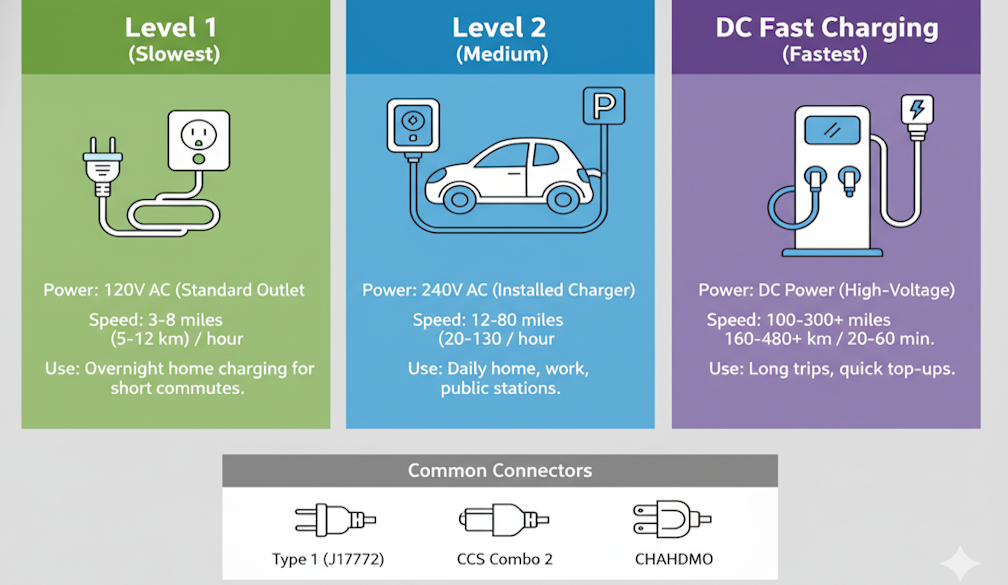
Charging an electric vehicle is no more complicated than plugging it in and letting the vehicle take care of the process.
While the systems behind EV charging may appear technical, the fundamentals are straightforward. Gaining a clear understanding of how charging works can help you maximise driving range, protect battery health and ensure your vehicle is ready when you need it.
This comprehensive guide explains AC and DC charging, the different charger levels, battery technology and how to choose the right EV charger for your home.
Key Points at a Glance
- The Ocular LTE Plus and the Tesla Wall Connector are leading choices for residential EV charging
- Fully charging an EV at home in Queensland costs approximately $12
- Limiting regular charging to 90% or less helps preserve long term battery health
Choosing the Right EV Charger for Your Home
For most households, one of the following options is recommended:
- Ocular LTE Plus: This unit supports charging speeds up to 22 kW and is compatible with all electric vehicles in Australia, including Tesla models.
- Tesla Wall Connector: If you own a Tesla, this charger integrates seamlessly with your vehicle. It is also suitable for most other EVs on the market.
EV chargers must always be installed by an experienced electrician in North Brisbane. While installation is generally straightforward, some homes may require switchboard upgrades or additional cabling. Your electrician can assess what is needed.
What Does It Cost to Charge an EV?
In Queensland, electricity averages around 30 cents per kWh. With a typical EV battery size of 40 kWh, a full charge from empty would cost roughly $12.
In reality, most drivers charge between 10% and 80%, which equates to around $8.40 per session.
A 40 kWh battery provides up to 270 km of driving range. Given the average Queensland driver covers approximately 12,000 km annually, charging once per week is usually sufficient. That totals about $620 per year in electricity costs.
The Four Charging Levels Explained
Electric vehicles can be charged using a standard 240V household outlet, or through dedicated EV charging equipment at home or in public.
Charging options are grouped into four levels:
|
Level |
Maximum Output |
Power Type |
Charging Time |
|
Level 1 |
2.2 kW |
AC |
12 hours |
|
Level 2 |
7 kW |
AC |
5 hours |
|
Level 2.5 |
11–22 kW |
AC 3 phase |
2 hours |
|
Level 3 |
25–350 kW |
DC |
Up to 1 hour |
Level 1 and Level 2 chargers use AC power and are suitable for residential installation. They deliver slower charging speeds, making them ideal for overnight charging or plug in hybrid vehicles.
Level 2.5 chargers also operate on AC power but require a three phase electrical supply. This upgrade enables faster charging and is common in commercial settings.
Level 3 chargers use high voltage DC power and are available at public fast charging stations. They can significantly reduce charging times, though not every EV supports this level of charging.
Understanding kW and kWh
Charging performance is commonly described using kilowatts and kilowatt hours.
A kilowatt (kW) measures the rate at which power is being used. The higher the number, the greater the power draw. For example, a Level 2 charger may draw up to 7 kW while operating.
A kilowatt hour (kWh) measures how much energy is consumed over time. If a charger uses 2 kW for one hour, it has used 2 kWh of electricity.
EV battery capacity is expressed in kWh. This figure represents how much energy the battery can store and is directly linked to how far the vehicle can travel on a single charge.
AC and DC Charging: What’s the Difference?
Both alternating current and direct current are used in EV charging.
AC charging is the type of electricity supplied to homes and businesses. Residential chargers typically deliver up to 22 kW.
DC charging is available at commercial fast charging stations and can provide up to 350 kW. Due to the high voltage involved, DC charging is not suitable for home installation.
Why Is DC Charging Faster?
Electric vehicles operate on DC power because batteries store energy in DC form. However, the main electricity grid distributes AC power.
When charging at home, the vehicle must convert AC into DC using an onboard inverter. This conversion process limits charging speed.
Higher level AC chargers contain larger inverters to improve performance, but they are still restricted by residential electrical capacity.
DC fast chargers bypass this limitation by supplying DC power directly to the battery. Because no internal conversion is required, charging is significantly faster.
Commercial DC chargers are designed to handle high voltage input and large scale energy conversion, allowing an EV to be charged in under an hour.
EV Battery Chemistry
Battery technology plays a major role in charging speed, range and lifespan.
Two primary battery types dominate the current EV market.
1. Lithium Ion Batteries
Lithium ion batteries are widely used across the industry.
Advantages
- Lightweight construction
- High energy density
- Longer driving range
- Strong charging performance
- Recyclable components
Disadvantages
- Shorter lifespan compared to newer alternatives
- Often contain cobalt
- Greater fire risk if damaged or improperly charged
Cobalt mining raises environmental and ethical concerns, making long term sustainability an ongoing discussion.
2. Lithium Iron Phosphate Batteries
Lithium iron phosphate, commonly known as LiFePO4, is increasingly used in more affordable EV models.
Advantages
- Longer operational lifespan
- Lower production cost
- Greater thermal stability
- No cobalt content
Disadvantages
- Lower energy density
- Reduced driving range
- Heavier construction
- Lower recyclability
Their reduced reliance on expensive minerals makes them cost effective and supports the growth of more accessible EV options.
Should You Charge to 100%?
Many manufacturers recommend keeping daily charging between 80% and 90% to extend battery life.
Charging to full capacity places additional stress on battery components, which can gradually reduce overall capacity and range. The same principle applies when repeatedly draining the battery to zero.
Each EV includes a battery management system that regulates charging speed and protects against overcharging. Following manufacturer guidelines helps maximise long term performance.
Professional EV Charger Installation in Brisbane
Although charging an EV is simple in practice, understanding best charging habits takes time.
Installing a dedicated home charger is one of the most convenient and cost effective ways to simplify ownership.
Always seek the expertise of an electrician with proven experience in the supply, installation and servicing of EV charging equipment.
If you are considering EV charger installation in Brisbane, get in touch with a trusted EV installer to discuss your options.


