

Why Seagrass Meadows Matter for Dugong Conservation
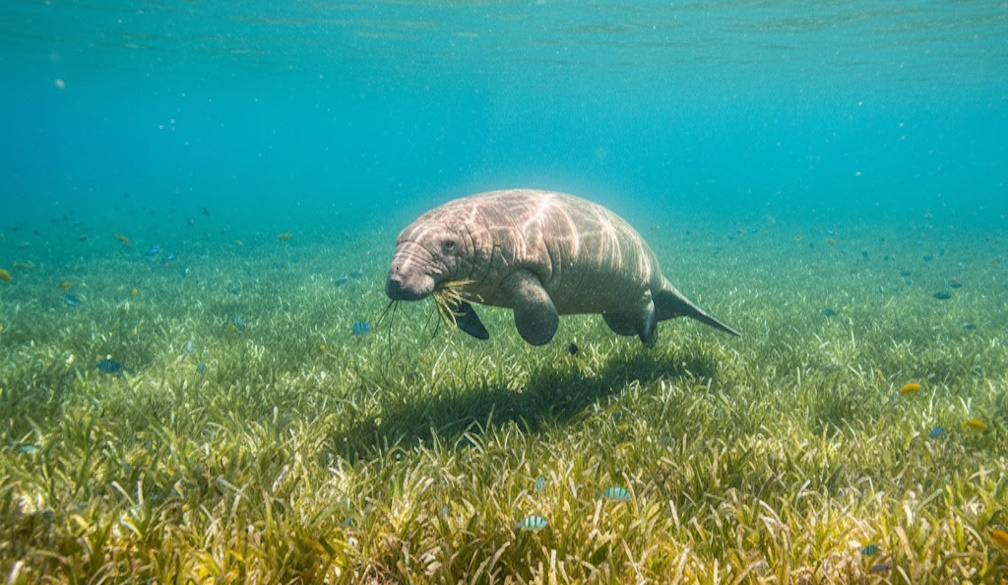
How Seagrass Meadows Support Marine Life
Seagrass beds are among the most productive ecosystems on Earth. They provide food, shelter, and nursery habitats for countless marine species, from crustaceans to sea turtles. According to the Smithsonian Institution, these meadows stabilize coastlines, filter water, and boost fishery productivity.
Key ecological roles include:
- Trapping sediment and preventing erosion.
- Absorbing large amounts of carbon, helping reduce greenhouse gases.
- Feeding herbivorous species such as dugongs and green turtles.
Because of these functions, healthy seagrass meadows are a sign of thriving oceans.
The Dugong-Seagrass Connection
Dugongs rely almost entirely on seagrass for their diet, grazing up to 40 kilograms per day. Their wide, downturned snouts are perfectly shaped to scoop seagrass shoots from the seabed. Where seagrass declines, dugong numbers fall soon after.
Marine researchers often refer to dugongs as indicator species. A flourishing dugong population signals strong seagrass health. But when these “sea cows” vanish, it often means pollution, dredging, or warming waters have damaged vital feeding zones.
For travelers hoping to experience these gentle giants firsthand, this guide on where to see dugongs in Australia highlights the best viewing regions and ethical ways to spot them without disturbing their habitats.
Why Seagrass Conservation Matters
1. Coastal Protection
Dense seagrass roots bind the seabed, buffering coastal areas from storm surges and reducing shoreline erosion, an essential defense in regions facing rising sea levels.
2. Biodiversity and FisheriesMany fish and crustaceans spend early life stages in seagrass meadows. A decline in seagrass directly impacts local fisheries and food security.
3. Blue Carbon StorageSeagrass meadows are powerful carbon sinks, storing up to 18 percent of the ocean’s carbon, according to the United Nations Environment Programme. Protecting them contributes to global climate goals.
Threats to Seagrass and DugongsHabitat Loss
Dredging, coastal development, and land reclamation uproot seagrass and destroy dugong feeding zones.
PollutionRunoff containing fertilizers, sewage, and sediment blocks sunlight, suffocating seagrass beds.
Boat TrafficPropellers and anchors tear through shallow seagrass areas, while boat strikes injure or kill slow-moving dugongs.
Climate ChangeWarmer waters and more frequent storms uproot meadows, leading to food shortages for dugongs and other herbivorous species.
Overfishing and EntanglementFishing nets can trap dugongs, leading to drowning. Responsible fishing practices and marine protected areas are essential to reduce these risks.
How Tourism and Local Communities Can Help
Sustainable Marine Tours
Tour operators can adopt low-impact practices such as limiting the number of daily visitors, enforcing no-anchor zones, and providing conservation education.
Citizen Science and MappingPrograms like Seagrass-Watch allow locals and tourists to monitor seagrass health using simple photo and data tools.
Indigenous StewardshipTraditional owners in Northern Australia have long protected coastal ecosystems. Incorporating Indigenous knowledge into modern conservation plans ensures lasting sustainability.
Where Seagrass Meadows Thrive
- Shark Bay, Western Australia: Home to the planet’s largest seagrass ecosystem and around 10,000 dugongs.
- Ningaloo Coast: A UNESCO World Heritage site famous for both seagrass meadows and megafauna encounters. Visitors can swim alongside whale sharks and spot manta rays, turtles, and dugongs in clear turquoise waters.
- Great Barrier Reef, Queensland: Seagrass beds here stretch across 35,000 square kilometers, feeding dugongs, turtles, and reef fish.
For travelers planning a visit to Western Australia, whale shark tours in Exmouth offer an unforgettable way to explore these pristine waters. Many tours incorporate responsible viewing practices that support marine research and seagrass protection.
Global Lessons from Seagrass Conservation
Efforts in countries like the Philippines, Thailand, and Indonesia show that involving local communities reduces poaching and habitat loss. Protected zones, eco-certified tours, and seagrass restoration projects are reversing declines in some areas.
The takeaway: sustainable tourism and strong conservation laws can coexist and even strengthen one another.
How Travelers Can Support Dugong and Seagrass Protection
- Choose operators certified for eco-friendly tours.
- Avoid walking on or anchoring in seagrass areas.
- Participate in seagrass monitoring or coastal cleanup events.
- Limit plastic use and reduce nutrient runoff when near coastal zones.
Each small action helps protect seagrass meadows and the unique wildlife that depend on them.
A Future Built on Healthy Oceans
Seagrass meadows are more than just underwater plants, they are vital ecosystems that feed dugongs, stabilize coastlines, and store carbon. Protecting them means safeguarding biodiversity, climate resilience, and coastal livelihoods.
And if you want to witness this delicate balance firsthand, the Ningaloo region offers the perfect setting, from whale shark tours Exmouth to dugong encounters and coral reef explorations. Conservation and adventure truly go hand in hand when travel respects and restores the natural world.


