

How to Cruise the Kimberleys in Luxury, and What “Luxury” Really Means Out There
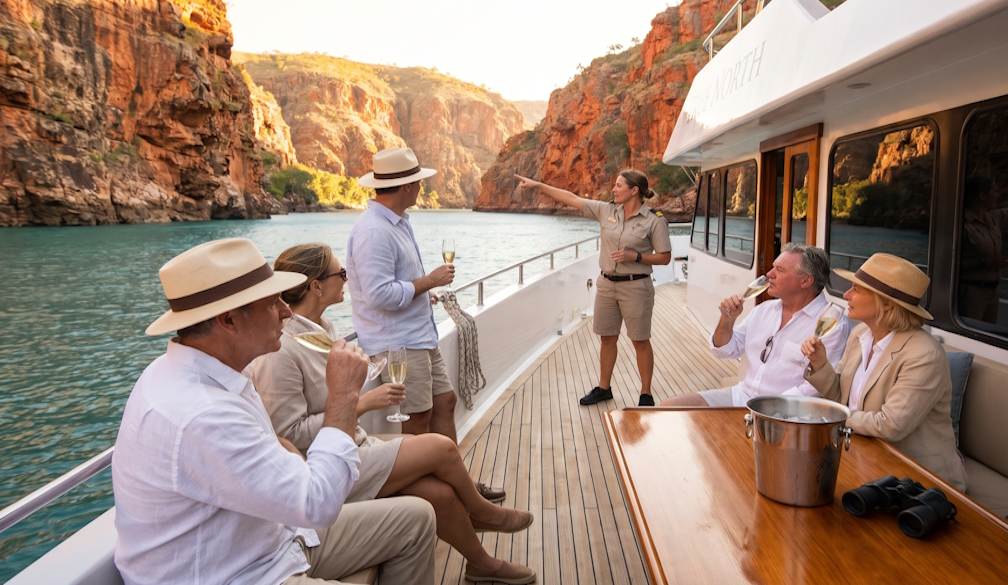
At Derby, on the edge of King Sound, the tide can rise and fall close to 12 metres. Further up the coast, an ebbing tide lifts Montgomery Reef, roughly 400 square kilometres of it, out of the sea in a rush of small waterfalls. None of that cares how soft your pillow is.
Keep that in mind if you’re planning to cruise the Kimberleys in luxury. The better ships here offer fine food, comfortable cabins and attentive crew. But on this coast, comfort is the supporting act. The real luxury is reaching places almost nobody else gets to, with the time and expertise around you to make sense of them.
Why the Kimberley coast changes what luxury means
The Kimberley coastline breaks into more than 2,500 islands, and outside a handful of towns (Broome, Derby, One Arm Point and Wyndham) very few points along it can be reached easily or safely by land. There’s no coastal highway, and the Gibb River Road runs well inland.
So the places on the postcards sit beyond the road network:
- King George Falls, the twin falls at the head of a sandstone gorge, about 12 kilometres up the King George River
- Montgomery Reef, which appears and disappears with every tide
- Talbot Bay, home to the Horizontal Falls
- The Buccaneer Archipelago
A scenic flight from Broome or Kununurra will show you some of them, and that’s a good option if time is short. To stand in them, swim near them or spend a morning nosing up a creek, you need to arrive by water.
Small ship or large expedition ship?
Ship size is the biggest decision you’ll make. Large expedition ships on this coast typically carry well over 100 guests and offer more public space and more dining options. If on-board comfort is your top priority, one may suit you better.
Small ships built for this coastline often carry fewer than 40 people, and that changes the trip in practical ways:
- Draft. A shallow-draft vessel can work into river mouths and sheltered bays at states of tide when a deeper ship must wait offshore.
- Tenders. Fewer guests means everyone can get onto the water at once, rather than in staggered landings that eat into the best light.
- Flexibility. A small group can shift plans around the tide, the weather and what the crew spotted the day before.
- Ratio. More crew per guest usually means more guiding and less queueing.
Ships designed around this coast tend to publish these details: guest numbers, how many adventure boats travel with them, and whether an aircraft is carried on board. The clearest way to cruise the Kimberleys in luxury is to compare those specifics before you compare cabin photos, because they decide what you’ll actually do each day.
What a day on board looks like
A premium Kimberley expedition is more active than most first-timers expect. A typical day might start with breakfast before seven, then a morning tender ride into a mangrove creek or a guided walk to a gorge pool. You’ll rest on board through the midday heat, head out again in the afternoon to match the tide, then finish with sundowners and some of the clearest night skies in Australia.
The tide sets the pace. With ranges this large, a bay you cross at breakfast can be a mudflat by lunch.
This is also saltwater crocodile country. Swimming happens only where the crew judges it safe, typically freshwater pools above the reach of the tide, and snorkelling and diving generally aren’t part of a Kimberley itinerary.
Outings range from gentle tender rides to scrambles over hot, uneven rock. If mobility is a concern, ask the operator which activities suit you before you book.
The comfort that matters after a big day
After hours in a tender under a northern sun, a few details count for a lot:
- Cabin air-conditioning you control, because dry-season days regularly reach the 30s
- Food cooked on board, often with fresh fish or mud crab when the chance arises
- Laundry and the right footwear, since you’ll be wet or muddy most days
- Large cabin windows, because the view outside is the point
- Honest connectivity, as satellite Wi-Fi on one of the world’s most remote coastlines is limited at best
What to check before you book a luxury Kimberley cruise
Fares are a significant outlay, so read the fine print.
What the fare includes. Inclusions vary between operators and sometimes between itineraries. Ask specifically about helicopter flights (often charged separately where a ship carries an aircraft), alcoholic drinks, park and visitor pass fees, and transfers.
How the itinerary is described. Here, every itinerary is a plan, not a promise. Tides and weather shape each day, so be wary of marketing that guarantees a particular sighting or experience.
Cancellation terms. Read them before paying a deposit, and check them against your travel insurance.
Timing. Most expedition voyages run from around March or April to September or October. Early season usually brings the strongest waterfalls and higher humidity. June and July tend to be cooler, calmer and busiest, so book well ahead. Later months bring warmer weather and lower waterfall flow. Ships don’t sail the coast in the wet season, roughly November to February.
The Horizontal Falls. In April 2026 the Western Australian Government confirmed that licensed operators can keep traversing the falls’ wide gap through the 2028 season, in partnership with the Dambimangari Traditional Owners. Access after that will be reassessed, so check how your itinerary handles Talbot Bay.
Conclusion
To cruise the Kimberleys in luxury is to pay for access, time and expertise as much as comfort. Start with the questions that shape your days: how many guests, how shallow the draft, how many boats come along and what the fare includes. Then look at the cabins and the food.
Go with realistic expectations, too. Waterfalls, wildlife and weather keep their own timetable here, and part of the experience is letting the tide decide the day.


